History of Davis
From Patwin homelands and a humble rail stop to a university city known for bikes, innovation, and local culture. Explore the milestones and properties that shaped Downtown Davis..
Introduction
Davis grew around the Southern Pacific rail line as “Davisville,” incorporated in 1917. The University Farm catalyzed steady growth, while deliberate planning fostered a compact, bike‑friendly downtown. The Farmers Market, Varsity Theater, and preserved storefronts reflect a civic focus on sustainable, small‑business‑centered placemaking.
Timeline
Pre‑1900
Before the City: Putah Creek & Farming Roots
Patwin homelands and early ranching along Putah Creek set the stage for the rail stop that became Davisville.
1900–1919
Rail Town to Incorporation (1917)
Davisville shortens to Davis; downtown grid, depot, and early storefronts anchor the community.
1920–1949
College Growth & Main Street
The University Farm (now UC Davis) expands; theaters, groceries, and garages line G, F, and E Streets.
-
1980–Today
Innovation, Arts & Sustainability
Downtown revitalization, farmers market, public art, and a culture of local entrepreneurship.
Historical Properties
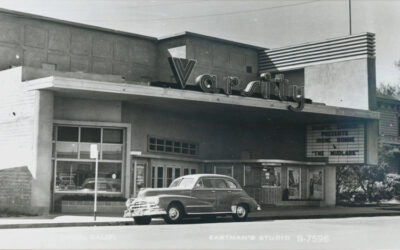
Varsity Theatre (1950)
This is a superb example of a late Streamline Moderne movie palace with original neon signage. The building marks the end of the downtown commercial area and the beginning of an early residential neighborhood and is a prominent visual landmark. Built in 1950 by the...
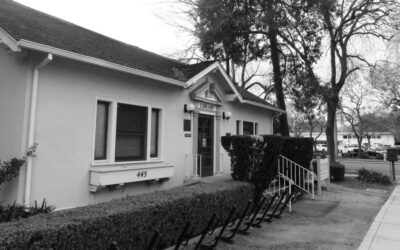
Hattie Weber Museum (1911)
The first library building in Davis, the original one room structure was built after volunteer fundraising to purchase the lot on F Street. The Bachelor Girls, a social organization, raised the $550 for construction through dances, luncheons, spinning bees and...
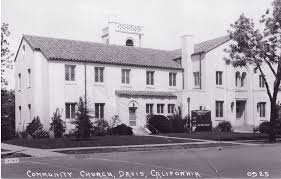
Davis Community Church (1926)
he only large-scale building built in the style of a Spanish Colonial structure in Davis, the church is a fine example of the best architectural achievements of the 1920’s. Not only is the structure significant, the basic landscaping makes its contribution, including...
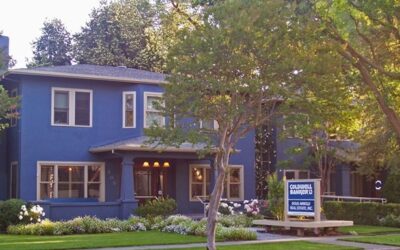
H.J. Hamel Home (1920)
This home, an example of the fusion of Colonial Revival and Craftsman elements, was built in 1920 by Henry Jacob Hamel and his wife Lida and served as the home for this prominent, early Davisville family for many years. Henry was the son of a German immigrant, Hartman...
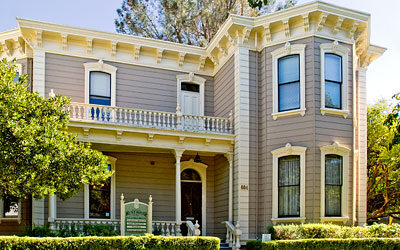
Dresbach Hunt-Boyer Mansion
This two story Stick-Italianate house is a superb example of the style and the most sophisticated and best preserved of its type in Davis. It was built in 1875 for William Dresbach, a prominent local merchant who was appointed Davisville’s first Postmaster, and the...
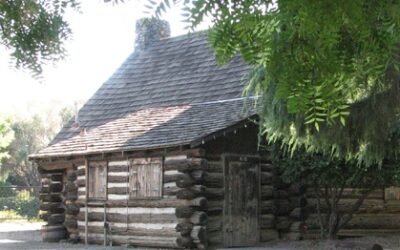
Boy Scout Cabin
The “Log Cabin” is an example of a continued fondness for the rustic forms and images of pioneer America. It is also an example of what community effort has accomplished in Davis. The community began looking for a place to house the growing range of scouting...
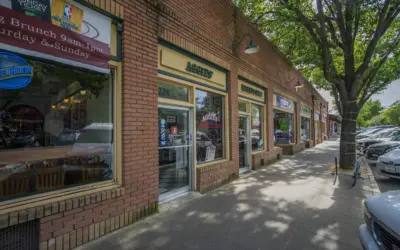
Brinley Block Building
Built in two phases (1926 & 1928), the Brinley Block Building, a one story brick structure, is an example of commercial architecture of the late 1920’s. The building incorporates several business establishments into one clean overall rectangular design, with...
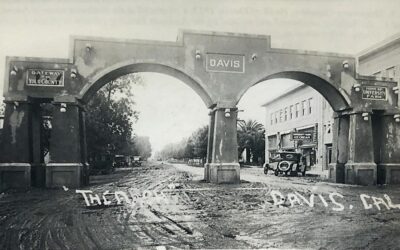
The Davis Arch (1916)
The Davis Arch, one of the most striking structures in early downtown Davis, no longer exists. It spanned 2nd Street at G, between buildings # 6 and # 7, welcoming visitors from the depot (# 8) and proclaiming “Davis” to be “Gateway to Yolo County” and “Home of the...